A Low Block or a High Press: Two Ways to Defend Space
A low block or high press shapes where a football team defends. Learn what each protects, the risks it accepts and how to spot the right choice.
A low block or high press determines where a football team tries to disrupt the opponent’s next move. In a low block, players gather closer to their own penalty area; in a high press, they close down the opponent’s defenders and goalkeeper. Neither is simply cautious or bold: each places pressure in a different part of the pitch.
Where pressure gathers
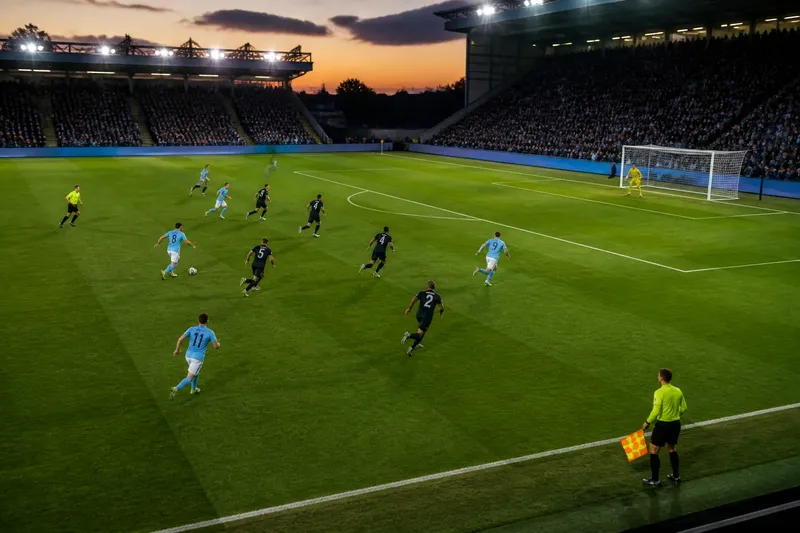
In a low block, the defending side allows the ball to travel into deeper areas before tightening around it. Defenders and midfielders stay connected, narrowing the space between their lines and protecting routes towards goal.
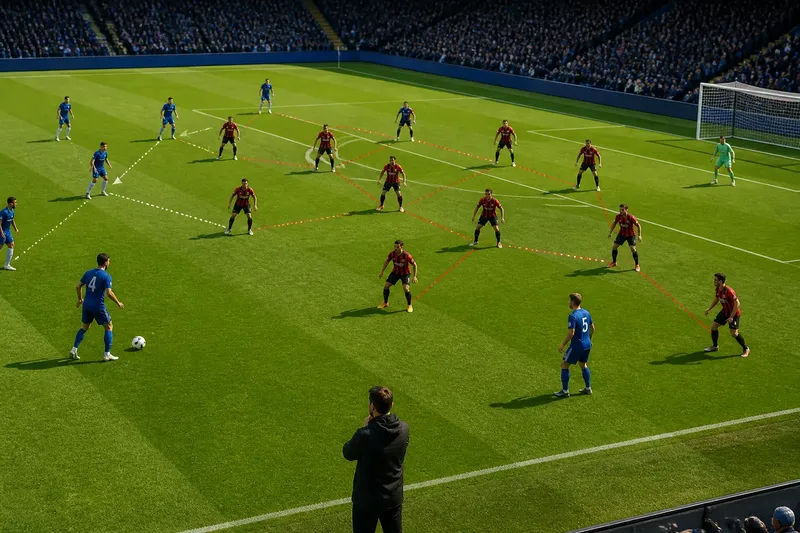
A high press tries to disrupt the opponent’s early build-up. Forwards may close the centre-backs while midfielders position themselves to discourage passes into central players. The aim is not simply to chase the ball; it is to direct the next action towards an area where several defenders can challenge together.
These are broad descriptions, not fixed formations. A team might press after a backward pass, then retreat if the opponent escapes. A side in a low block can still step forward to contest a loose touch. The useful question is where the team expects to do most of its defending, not whether every player stays on one line.
How a low block protects space
A team defending deep can put more players between the ball and its goal. A compact shape makes central passes harder and encourages the opponent to find another route, often towards the touchline or into a crowded area. The ball carrier then has less room to turn and fewer short passing options.
The back line may stand close to the penalty area, with midfielders screening the space ahead. Spacing depends on the team and situation: defenders need to stay close enough to help one another without opening a gap between midfield and defence. Goalkeepers must also judge how far forward to position themselves, since a deep line can leave room for a pass behind it.
This approach can suit a side that wants to defend in a settled shape, particularly against an opponent comfortable building from the back or one with quick attackers ready to run into open space. It may also suit a team protecting a lead late in a match, although deeper defending brings sustained pressure and demands concentration.
A low block does not remove danger; it changes where the opponent can try to create it. The attacking team may move the ball across the edge of the area, attempt crosses or wait for a defender to step out and open a passing lane. If the defending side wins the ball, it still needs an outlet. Without a forward or supporting runner available, a clearance can send the attack straight back towards the same crowded area.
How a high press closes routes
A high press tries to disrupt the opponent before an attack develops. The first defender may approach the ball carrier on a curved run, blocking one passing direction while applying pressure. Teammates cover likely short options, forcing the player in possession to decide quickly or send the ball long.
Coordinated movement matters more than any individual sprint. If one forward charges while teammates remain too far away, the opponent can pass around the challenge and find room behind it. The press works as a connected shape: players advance together, adjust to the ball and recognise when to continue or drop back.
A high press can suit a team with energetic forwards, midfielders who read passing lanes and defenders comfortable holding a higher line. It can help a side regain the ball near goal, where a turnover may create an immediate chance. But pressure asks players to cover large spaces if the opponent breaks through, and a well-timed pass can leave the defensive line exposed.
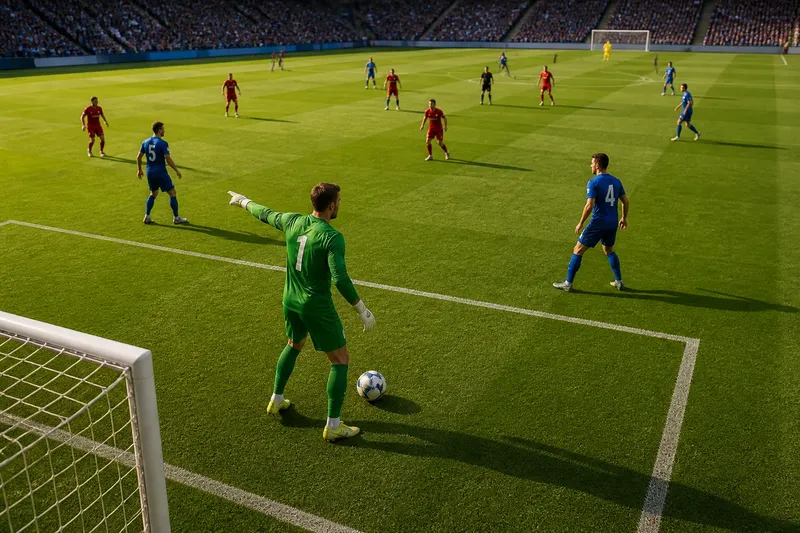
The opponent’s goalkeeper is part of this contest. If the keeper passes accurately under pressure, the pressing team may have to commit more players or accept that the first line can be bypassed. If the goalkeeper is hurried into a long kick, the press has redirected play, but the defending team still needs to contest the second ball.
The trade-offs in play
A low block gives the opponent territory but packs players around the route to goal. A high press challenges the opponent near its own goal, while leaving more space behind the advancing defenders. Like placing chairs around a table, the arrangement determines which routes are easy to use and which are crowded; it does not remove the need to respond when play changes.
For a low block, the main risk is allowing repeated deliveries into dangerous areas. For a high press, it is leaving space behind the advancing line and between players if the opponent escapes. Both approaches depend on what happens after possession changes: a deep defence needs a way to move the ball forward, while a pressing team must recover its shape quickly when the first challenge fails.
Say a team faces centre-backs who pass calmly and forwards who threaten space behind the defence. Its coach chooses to press after backward passes, then retreat into a compact low block if the opponent plays through the first line. The sequence is specific: the forwards close down after the backward pass; midfielders block central options; if the opponent breaks through, the defenders retreat and midfielders recover. The expected observable result is a team changing its defensive height in response to the ball rather than holding one line throughout the match.
Teams can also use a medium block, holding their shape around the middle third, or combine a high press in some phases with a deeper line in others. The score, available players, fatigue and the opponent’s build-up pattern can all influence where a team chooses to engage.
Choosing a defensive height
Choosing between a low block or high press means matching the defensive shape to the players and opponent. Check each observation and use the result to decide what adjustment fits:
- Opponent’s first pass: If centre-backs struggle when closed down, press them near their goal; if they pass through pressure, retreat into a compact block and protect central space.
- Team movement: If forwards, midfielders and defenders advance together, continue the high press; if the lines become separated, drop back and reconnect them before pressing again.
- Space behind the defence: If opponents are making runs into that space, lower the line or have defenders and goalkeeper manage it together; if the opponent cannot reach it, a higher line remains an option.
- Crosses and shots: If the opponent repeatedly delivers from wide areas or shoots around the edge of the penalty area, adjust the block to close those routes; if central entries are the greater threat, keep the middle compact.
- Outlet after a turnover: If a forward or runner is available to receive a pass, use that outlet to relieve pressure; if no one can hold the ball, keep support closer or choose a clearance that gives teammates time to advance.
- Current match demands: If the team is tiring or the opponent has changed its build-up, retreat or alter the pressing cue; if players remain connected and the initial pressure is effective, keep the existing approach.
These checks help explain a tactical choice, not prescribe one answer for every match. A team may favour one shape because its players are suited to it, then change the height when the opponent changes its build-up. Watch the first movement after a pass: do defenders retreat to protect the area, or step forward to keep the ball under pressure?
Questions about defensive shape?
Is a low block the same as parking the bus?
Not exactly. “Low block” describes a compact defensive shape positioned closer to its own goal; it does not say how many players attack or whether the team can counter. “Parking the bus” is a more dismissive phrase for an especially defensive approach.
Does a high press always start with the striker?
Forwards often begin the pressure, but the whole team determines whether it can work. A midfielder may close a passing option, or a defender may step forward when the ball reaches a receiver with little room.
Can a team switch from pressing to defending deep?
Yes. Teams can press after a chosen cue and retreat if the opponent plays beyond that pressure. An organised retreat, rather than a series of separate sprints, suggests the change is planned.
Reading the team’s choice
Follow the team without the ball for a few possessions. Notice whether its forwards try to influence the first pass, how closely the midfielders sit to the defenders and where the opponent is allowed to receive facing forward. Those details reveal the team’s preferred defensive territory more clearly than a formation graphic.
A low block or high press allocates risk across the pitch: one asks the opponent to attack a crowded area, while the other challenges it before an attack can settle. To read the choice, track the defenders’ position alongside the ball; the space they protect often reveals more than the pressure around the current pass.