Before the Back-Pass Rule: A Goalkeeper’s Changing Role
Back-pass rule history shows how a ban on handling certain teammate passes reshaped goalkeepers’ duties, from a safe catch to a decision with the feet.
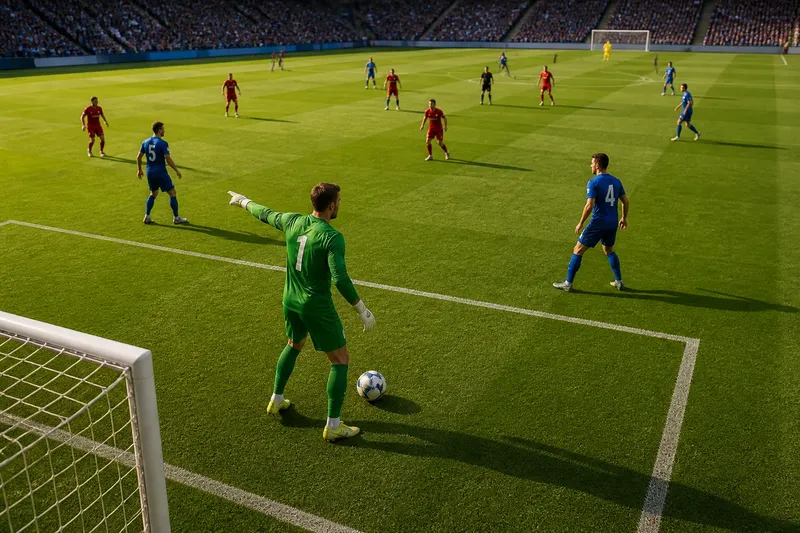
Before the back-pass rule, a goalkeeper could catch a deliberate kick from a teammate and reset play with a throw or kick. Back-pass rule history is also the story of a new job: goalkeepers had to become more involved with their feet.
The safe reset
For much of football’s earlier history, a goalkeeper could handle a ball deliberately kicked by a teammate. Under pressure, a defender could send it back, allowing the keeper to gather it and slow the match. The keeper might hold the ball, organise teammates, then choose a long kick or a throw towards an available player.
This was useful when opponents pressed aggressively or a defender had no clean forward option. Repeated returns to the keeper could also drain urgency from an attack. The goalkeeper offered a refuge from pressure, rather than necessarily acting as another passer in a possession sequence.
Why the law changed
The back-pass restriction was introduced after teams began using deliberate returns to the goalkeeper to waste time and protect a lead. The concern was visible in international football, where slow, repetitive possession could leave little forward action. The law-makers’ response was to remove the keeper’s right to handle a teammate’s deliberate kick.
The restriction entered the Laws of the Game in the early 1990s. It did not ban every pass back: a keeper could still receive a teammate’s pass with the feet, and could handle the ball in other circumstances allowed by the Laws. The change targeted a specific shortcut—kicking the ball back so the goalkeeper could pick it up.
The first adjustment
Defenders now had to consider the goalkeeper’s next touch before sending the ball backwards. A pass that once invited a catch could leave the keeper needing to control, turn and clear while an opponent closed in. A hurried clearance might surrender possession; a poor touch could put the goal under immediate threat.
That made the keeper’s receiving position matter. Goalkeepers increasingly needed to set their body so a first touch opened a route to a pass or clearance, rather than trapping the ball under pressure. Their feet became part of the team’s emergency plan, not merely a way to restart after a save.
A new build-up role
Once the keeper could not solve every pressured return with a catch, defenders had stronger reasons to offer useful passing angles. The goalkeeper could move the ball to a centre-back, full-back or midfielder, helping the team keep possession and draw opponents towards one side. The law did not dictate a single formation; it changed the options available at the back.
Some teams still chose a direct kick when a safe short pass was missing. Others developed a more deliberate first phase, with the keeper positioned to receive and distribute. It was like replacing a locked cupboard with a doorstop: the ball stayed available to the team, but the next action had to happen in the open.
Skills beyond the gloves
Modern goalkeepers are judged not only on handling and shot-stopping, but also on touch, passing range and decisions under pressure. A keeper may play a short pass to a defender, switch the ball across the pitch or send it long when nearby options are closed. The right choice depends on teammates’ positions and the opponent’s shape.
This does not mean every goalkeeper should force a short build-up. A safe clearance can be sensible when a teammate is marked or the ball arrives awkwardly. The lasting change is that distribution became a live decision during play, rather than a task reserved mostly for restarts.
How does the rule apply?
Can a goalkeeper handle every back-pass?
No. Under the Laws of the Game, a goalkeeper cannot handle a ball inside their own penalty area if a teammate deliberately kicks it to them, including from a restart such as a goal kick. The restriction also applies if the goalkeeper handles the ball after receiving it directly from a teammate’s throw-in. The keeper may control either delivery with the feet, but cannot pick it up.
What if a teammate uses a different body part?
The restriction concerns a deliberate kick, not every deliberate pass. A teammate’s deliberate header is not covered by that particular handling offence, though trickery used to circumvent the Law can still be punished. Accidental deflections and miskicks are judged according to the circumstances, so the action’s nature matters.
Can the keeper handle a ball played by an opponent?
Yes, a goalkeeper may generally handle an opponent’s deliberate pass inside their own penalty area. The Laws contain specific exceptions, including an opponent’s deliberate kick that merely deflects or rebounds from the goalkeeper, and an opponent’s deliberate save. Those situations do not create permission to handle the ball.
What happens if the goalkeeper handles it illegally?
The opposition receives an indirect free kick for the handling offence. It is taken from where the offence occurred; if that spot is in the goal area, the kick is taken from the nearest point on the goal-area line parallel to the goal line. A referee may also caution a player who uses a deliberate trick to circumvent the restriction.
Reading the keeper’s choice
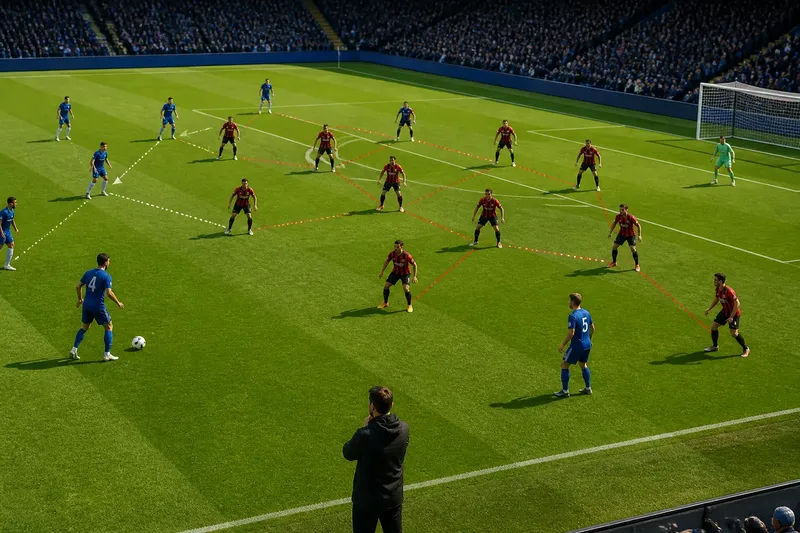
Watch what happens after a defender turns towards their own goal. If the keeper moves early into a passing lane, the team may be preparing to retain the ball rather than clear it. If the keeper stays deep while defenders spread out, they may be creating room for a longer delivery.
Say a centre-back receives the ball near the corner of the penalty area as an opponent approaches. The goalkeeper steps into view and angles their body towards the far side, so the defender sends a controlled pass back. The keeper then switches play with a one-touch pass; the observable result is that the team escapes the approaching player without the goalkeeper handling the ball.
Back-pass rule history is clearest in that exchange: the goalkeeper remains the last line of defence, but is also a player who must offer an outlet and choose how to use it. Watch whether the keeper’s position gives defenders somewhere to pass—and whether the keeper knows when a direct clearance is wiser.