Your First Match in the Stands: What to Notice
A first football match is easier to follow when you know where to look: read team shapes, track play away from the ball and join ground rituals.
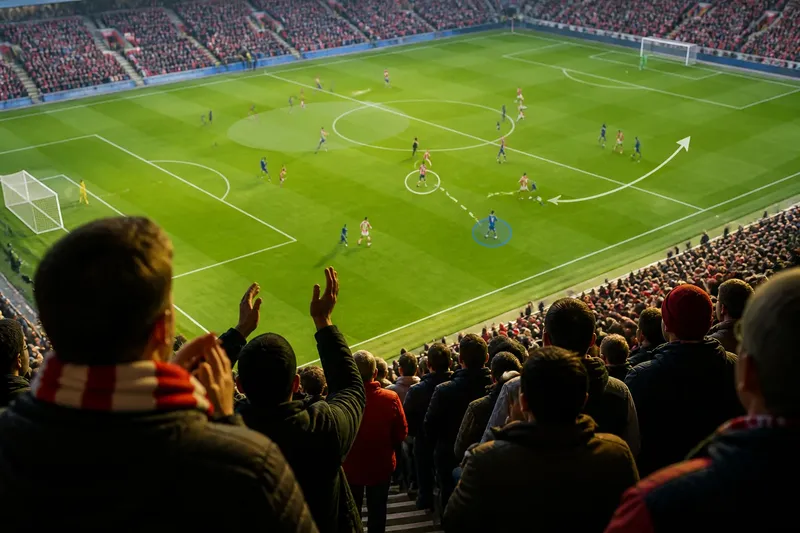
Your first football match is easier to follow when you stop trying to watch every player at once. Pick out each team’s shape, follow one movement away from the ball, then let the crowd’s familiar rituals show you how the match is being felt. That gives the action a thread without requiring you to know every law or chant.
A live view differs from a screen: the whole pitch is available, but there is no camera to point out what matters. You might lose the ball in a tangle of shirts, miss why a pass opened space, or feel unsure when supporters stand and sing. These are ordinary first-visit snags, not signs that you are watching incorrectly. Try this calm viewing plan, in order, and adjust it to the ground and your own seat.
When the pitch looks crowded
What happens: the ball moves quickly among players, and the pitch seems to dissolve into a cluster. You follow the pass but cannot tell what either side is trying to do.
What usually causes it: attention is locked on the ball, where several players are often gathering. The players farther away can look static, even when their positions are shaping the next pass or closing an escape route.
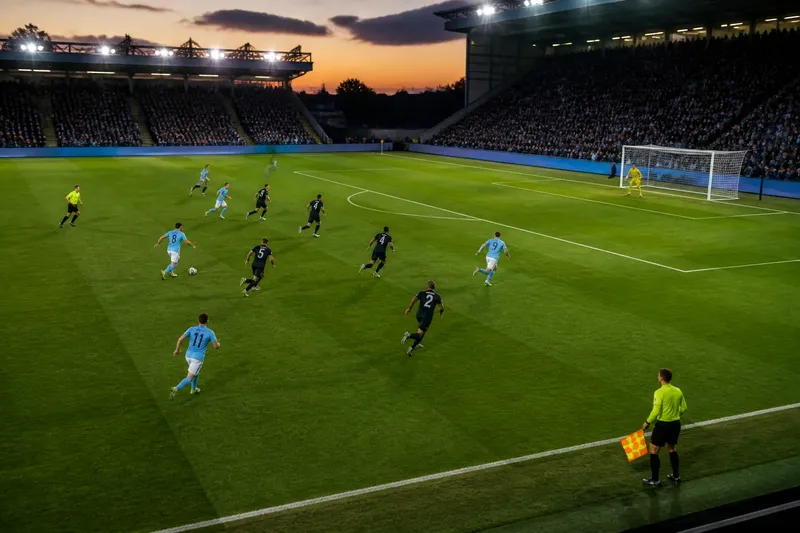
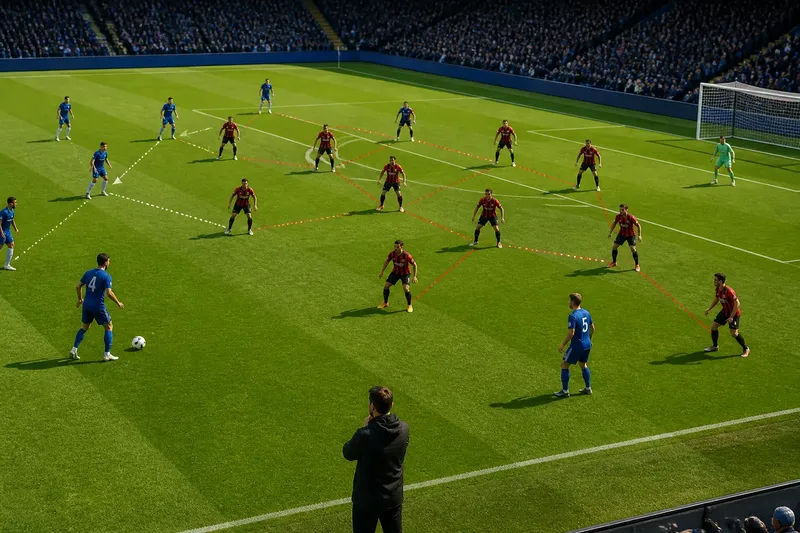
What to try: begin with the two team shapes. Without counting players, notice whether each side has a line of defenders, a group across midfield and one or more players higher up. Ask which team has more people near the ball, and where the open space lies. Treat that as a quick sketch, not a fixed formation: players shift as the ball travels.
Follow one change at a time. When the ball goes to a wide player, glance towards the nearby attackers: does one run beyond the defence, while another holds a position for a short pass? On the other side, notice who steps out to challenge and who stays back to cover. A team shape is less like a diagram on a wall than a set of magnets that keep tugging towards the ball.
After a few exchanges, look again at the overall arrangement. Does one team push its defenders higher when it has possession? Does the other settle nearer its own goal? You need not name a formation to see that one side is trying to advance and the other is protecting space. That broad reading is enough to make the next attack easier to follow.
When the ball steals your attention
What happens: you see the pass, then miss the run that made it possible. The move looks sudden or lucky, and the play away from the ball feels like a blank space.
What usually causes it: the ball is the obvious centre of a live match, but an attack often depends on people moving before a pass arrives. Defenders make choices too: a player may leave a position to challenge, or stay with an opponent instead of closing the ball.
What to try: keep the ball in view for the basic sequence, then take a brief look just beyond it. Track one attacker who is not carrying the ball. Are they checking towards a teammate, running into open space or drawing a defender away? Then return your gaze to the ball and see whether that movement changed the available options.
Try the same idea during defence. When the opposition carries the ball forward, watch a defender who is not nearest to it. They may tuck in to protect the middle, follow a runner or move across to support the player challenging. The choice can explain why a pass is blocked even when that defender never touches the ball.
Keep the exercise small. Choose one off-ball player for a short passage, then choose someone else later. Trying to track every run is like trying to read every line on a noticeboard while walking past; you will remember more by selecting one detail at a time. If you lose the play, return to the ball and wait for the next clear phase.
When the match changes direction
What happens: the ball suddenly travels towards the other end, and you cannot tell whether the change came from a planned move, a mistake or a deflection.
What usually causes it: transitions happen quickly. A team may win the ball and send it forward before the opposition has recovered its shape; alternatively, a loose touch or interception may simply hand over possession.
What to try: look first at the player who receives the ball, then at the nearest forward options. Notice whether teammates immediately sprint into space, offer short passes or pause to let the team move up together. Watch how quickly the opponents turn and recover. Those visible reactions tell you whether the moment is becoming a counterattack or settling into a slower build-up.
Do not worry if you cannot identify the exact cause of every change. The useful question is what each team does next. One side may try to exploit space before it disappears; the other may gather behind the ball and make that space harder to reach. You can read those intentions from movement, even when the original touch was difficult to see.
When the crowd feels unfamiliar
What happens: nearby supporters rise, clap or sing, and you are unsure whether to join in or what prompted the reaction. The sound can be as startling as a sudden breakaway.
What usually causes it: a ground has shared habits, but they are not always explained to newcomers. A chant might accompany a team’s entrance or a spell of pressure; a cheer can follow a chance even if the ball does not go in. Supporters may also stand to improve their view of a dramatic moment.
What to try: listen first and follow the people around you. You can clap along when it feels comfortable, or simply enjoy the sound without taking part. Notice when the crowd’s volume rises, then look towards the play: the response may show that the team has forced a corner, won the ball high up the pitch or created a chance.
Shared rituals offer another way into the match. Watch what happens before kick-off, after a goal or during a break in play. The details vary from ground to ground, so there is no need to imitate a particular gesture. If you are unsure about a chant or a moment of silence, a quiet pause lets you take your cue from those around you.
Say you arrive at a home ground where the crowd stands for the teams’ entrance and begins a familiar song. You could stay seated until the entrance is clear, notice how the noise rises as the players emerge, then join the clapping if it feels natural. The observable result is simple: you have followed the room’s lead without needing to know the words or make yourself the centre of attention.
When you miss a decision
What happens: play stops, supporters react, and you cannot tell what happened. A free kick, a throw-in or an official’s signal may seem to appear without warning.
What usually causes it: the action can happen on the far side of the pitch, where a player’s touch or contact is hard to see from your seat. Crowd reactions are not a reliable explanation: one group may appeal for a foul, while the referee allows play to continue.
What to try: watch the referee and the players nearest the incident. The direction of an arm signal and the way the teams arrange themselves often indicate what happens next. If the ball is set down, note who takes the restart and where opponents stand; you can follow the renewed play without reconstructing every detail.
At half-time, you might ask a companion what the call was, or check a match programme or club display if one is available. There is no need to turn every pause into a rules test. For your first visit, following the restart is often more satisfying than guessing from a distant view.
When your attention runs out
What happens: after concentrating hard, you feel behind again. You may miss a run, a chant and a change of possession in the same passage.
What usually causes it: a full match offers more detail than anyone can absorb at once, especially from a new viewpoint. Trying to watch the ball, both team shapes, every off-ball movement and the crowd continuously turns a lively afternoon into an assignment.
What to try: give each spell of play a simple focus. Follow the ball through one attack, then use a pause to scan the teams’ positions. During a stoppage, take in the atmosphere. When play resumes, choose one player away from the ball and see what they do. If the pace feels too quick, watch the next few exchanges without setting yourself a task.
Let goals, corners and substitutions interrupt your plan. A goal may change how a team approaches the next phase; a substitution can bring on a fresh attacker or alter where a player stands. You do not have to explain the change as it happens. Notice the new movement, then see whether it becomes a pattern.
What should you watch first?
Where do I look when play starts?
Start with the ball and the nearest players so you can follow the immediate action. Once a pass is on its way, glance at the space around the receiver and at the team’s wider shape.
How can I spot a team’s shape?
Look for broad lines of defenders, midfielders and attackers, rather than trying to assign a formation name. Check whether those lines move forward together, retreat or spread towards the sides as the ball changes position.
What does a run away from the ball tell me?
It can offer a passing route, draw a defender away or help a teammate find room. Watch whether the player receives the ball or whether someone else benefits from the space they have created.
Do I have to know the chants?
No. Listening, clapping when you feel comfortable and observing the crowd’s response are all ways to share the occasion. The local habits will become clearer as you notice when supporters sing, stand or applaud.
A simple viewing rhythm
For your first football match, keep three questions in mind: how are the teams arranged, what is happening away from the ball, and how is the crowd responding? Move between them when the play gives you a natural pause. If a moment escapes you, return to whichever question is easiest to answer.
There is no single correct way to watch from the stands. A seat nearer the touchline may make nearby runs clearer; a higher view may help you see the team shapes. Either way, the useful habit is the same: pick one detail, follow it for a little while, then let the next phase of play choose your attention.